


A
Absolute Humidity
The amount of water vapor present in a unit volume of air, usually
expressed in kilograms per cubic meter (see Humidity and Relative
Humidity).
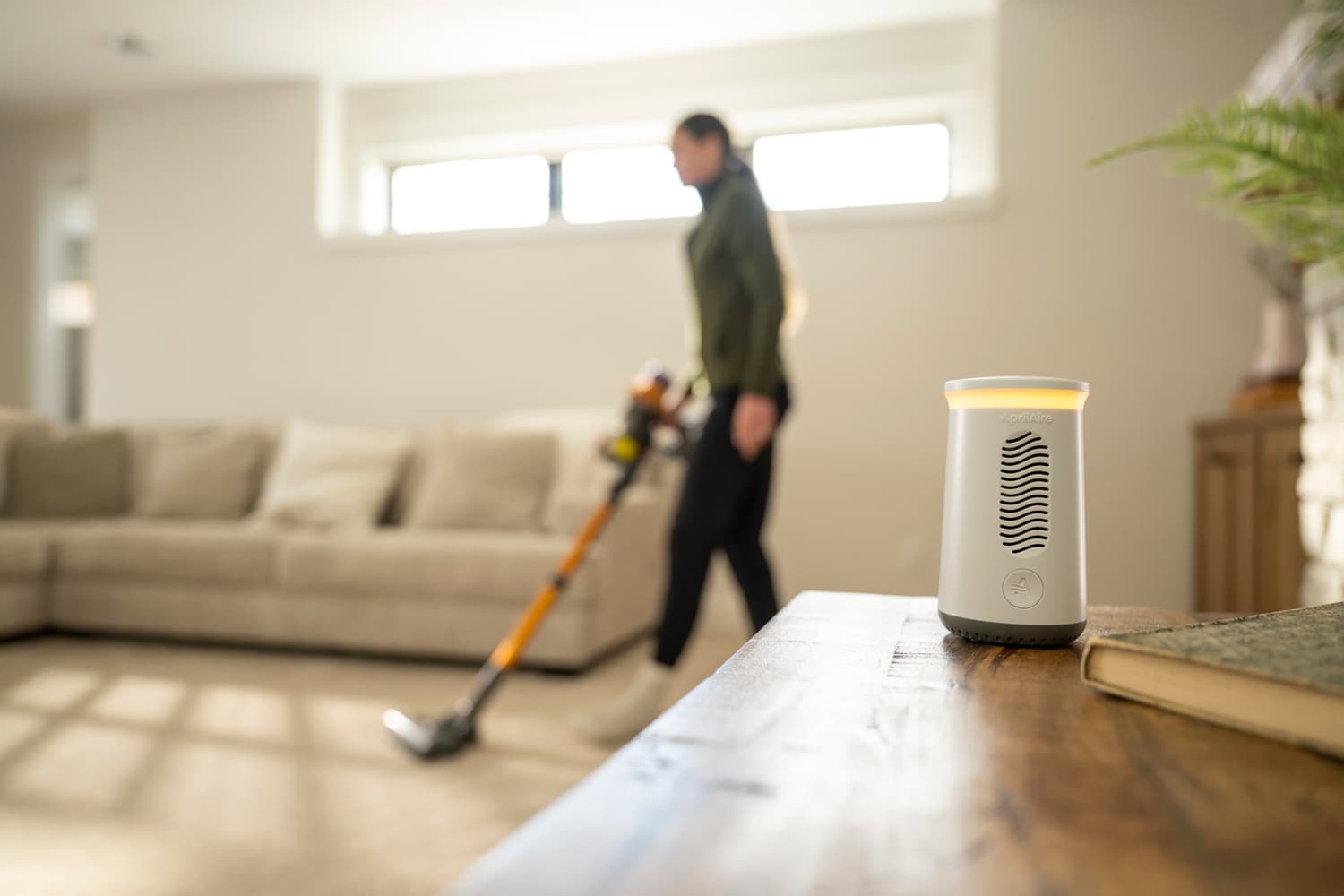
Air Cleaner
Also referred to as an air purifier; device that removes indoor air pollutants and particulates from the air in the home.
Air Handler
Part of your HVAC system that is connected to your home's ductwork and moves heated or cooled air throughout your home via the ductwork.
Aprilaire IAQ Specialist
An HVAC contractor that has been trained by Aprilaire on installations
and applications of Aprilaire Indoor Air Quality (IAQ) products.
B
Baseboard Heat
Electric or hydronic room heaters that are fastened to the wall near the floor.
Blower Call
A signal from the thermostat to turn on the fan of the air handler or furnace. A blower call does not provide heating or cooling to the home, but circulates the air, providing additional operation time for an air cleaner or other accessories.
Bypass Damper
1. When used in zoning, it is a damper used to relieve excess system pressure caused when a small or single zone is making a heat or cool call. 2. When used with a bypass humidifier, a damper that closes off the bypass duct in the summer to stop air from being "blown" into the return.
Bypass Humidifier
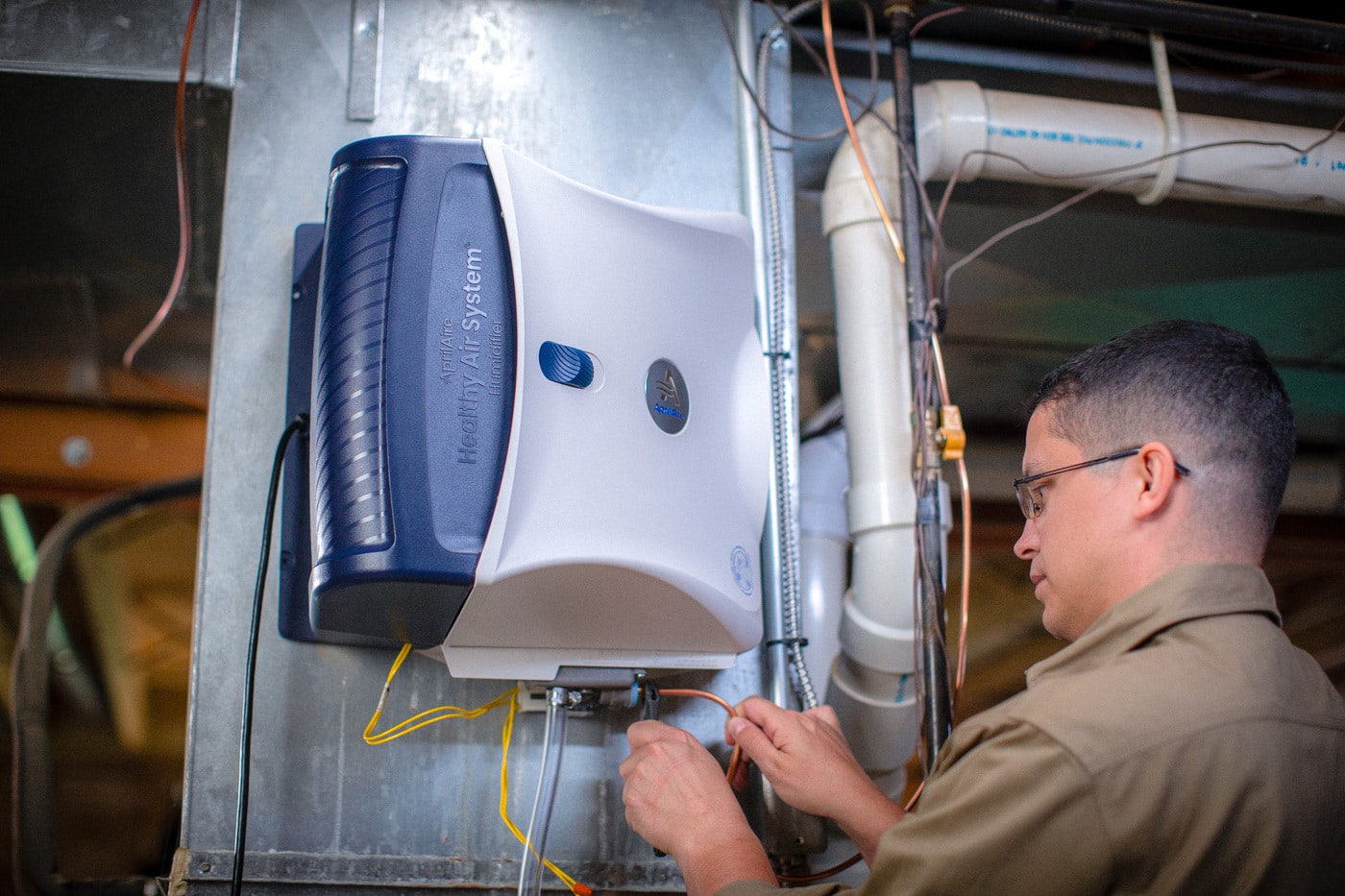
A type of humidifier that uses the pressure difference between the supply duct and the return duct of the HVAC equipment to move air over the evaporative pad.
C
CADR
The abbreviation for clean air delivery rate. A rating number that is used to indicate the volume of filtered air delivered by room or portable air cleaners.
Carbon Monoxide
A highly toxic gas that is colorless, odorless and tasteless. Created
from the incomplete burning of natural gas or any other material
containing carbon including gasoline, kerosene oil, propane, coal or
wood.
CFM
The abbreviation for cubic feet per minute, a standard measure of
airflow.
Condensate Pump
A device that is used to pump condensate (water vapor) produced in a HVAC system to a drain. Large pumps are typically pad-mounted drawing condensate from a tank (sump) below the floor. Small pumps may have no tank and are placed within a container such as the drip pan of a dehumidifier.
Condensation
Occurs when a vapor cools to a liquid. Liquid that has been condensed from a vapor is called condensate.
D
Damper
A device used to control airflow in ductwork. Commonly used in zoning applications where the damper will open or close to regulate the amount of warm or cool air into different areas of the home.
Dehumidifier
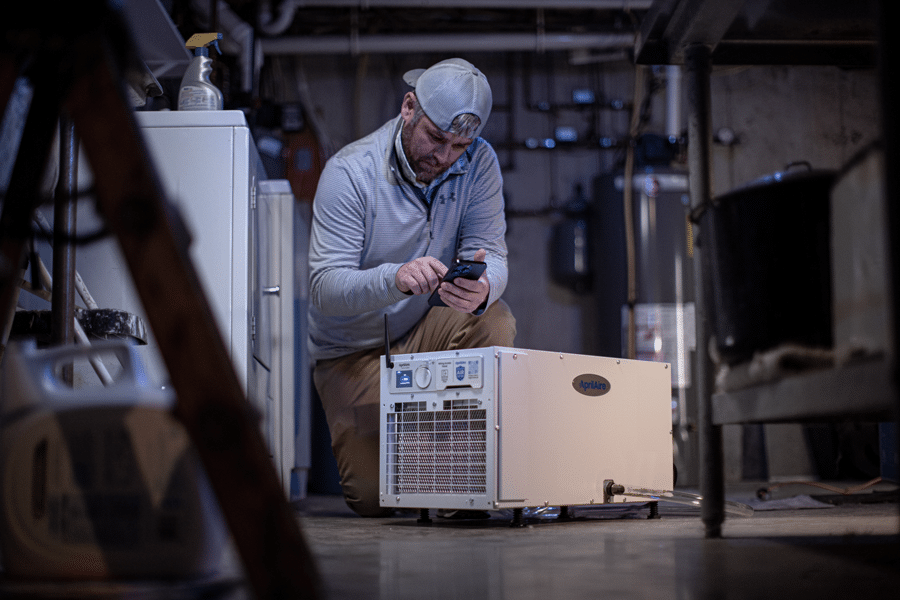
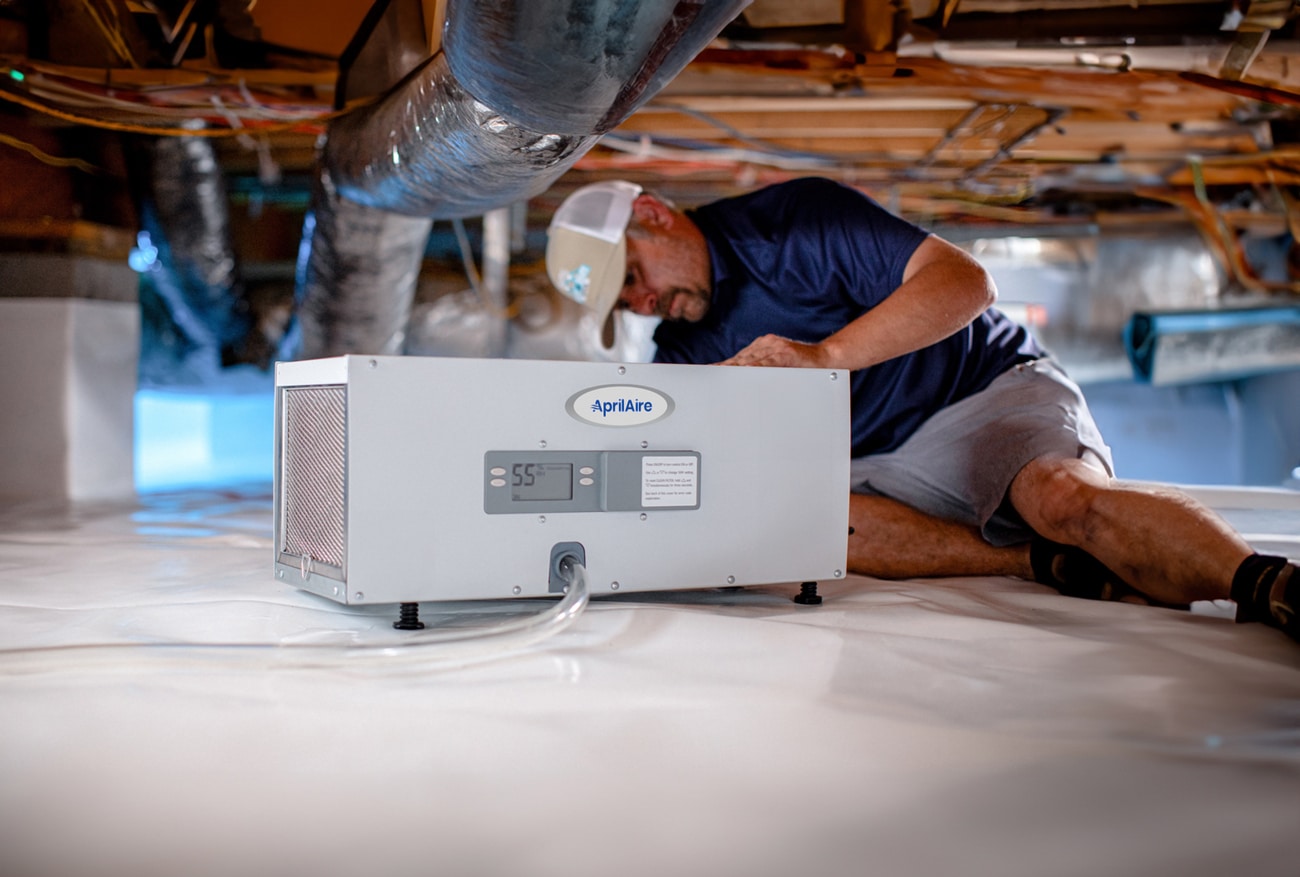
Product that removes excess moisture or humidity from the air.
Ductwork
System of metal or flexible tubing by which air is transported from the
HVAC system throughout a home.
Dust Mites
Microscopic creatures that feed on shed skin cells, thrive in high moisture areas above 50% relative humidity, and whose body parts and excrements are common causes of asthma and allergy attacks.
E
Efficiency (Filter)
Measure of how well an air cleaner removes particulate, usually expressed as a percentage. Example: if an air cleaner is 94% efficient on 0.3 micron particles, this means that it removes 94% of the particles of that size that pass through it.
Electronic Air Cleaner
An electronic device that filters out particulates and pollutants in
the air. Smaller particulates, such as viruses and mold spores, are
then charged and captured by the collector plate.
Energy Recovery Ventilator (ERV)
Mechanical equipment that provides controlled ventilation into a home by exchanging polluted indoor air, with fresh outdoor air. Works like a Heat Recovery Ventilator (HRV) except an ERV "recovers" moisture as well as heat.
Energy Star
A government-backed program run by the U.S. Environmental Protection Agency to promote more energy efficient products. Products that are Energy Star rated meet strict energy efficiency guidelines set by the EPA.
Evaporative Capacity
The amount of water vapor a humidifier can add to the air over a period of time, usually specified in gallons per hour.
Evaporative Humidifier
A type of humidifier that changes water from a liquid to a vapor before it is distributed through the ductwork.
Evaporator Coil
Component of the air conditioner or heat pump whose primary function is reducing the temperature of the air that passes through it.
F
Float
The part of a switch that rises with the water level, and turns off the switch once the water has reached a certain level.
Forced Air System
A heating and/or cooling system that blows conditioned air via ductwork throughout the home.
Formaldehyde
A volatile organic compound (VOC); potential sources in the home include pressed wood products such as particleboard or fiberboard, smoking, as a component of glues and adhesives, etc.
G
Gas Furnace
A forced air system that burns gaseous fuel, such as natural gas and
propane, in a heat exchanger.
H
Heat Pump
A HVAC unit that heats or cools the home by moving heat. In the winter, the heat pump draws heat from outdoor air and circulates it through your home's ductwork. In the summer, the process is reversed with the heat pump removing heat from the house and releasing it outdoors.
Heat Recovery Ventilator (HRV)
Ventilation system that recovers the heat energy in the exhaust air and transfers it to fresh air as it enters the home. Works like an Energy Recovery Ventilator, except that ERV's also transfer the humidity level of the exhaust air to the intake air.
HEPA
Abbreviation for high efficiency particulate air [filter], a rating used by the Department of Energy to denote an air cleaner or filter that is 99.97% efficient or better at removing 0.3 micron-sized particles from the air passing through it. Sometimes referred to as "True HEPA" to distinguish it from "HEPA-Type".
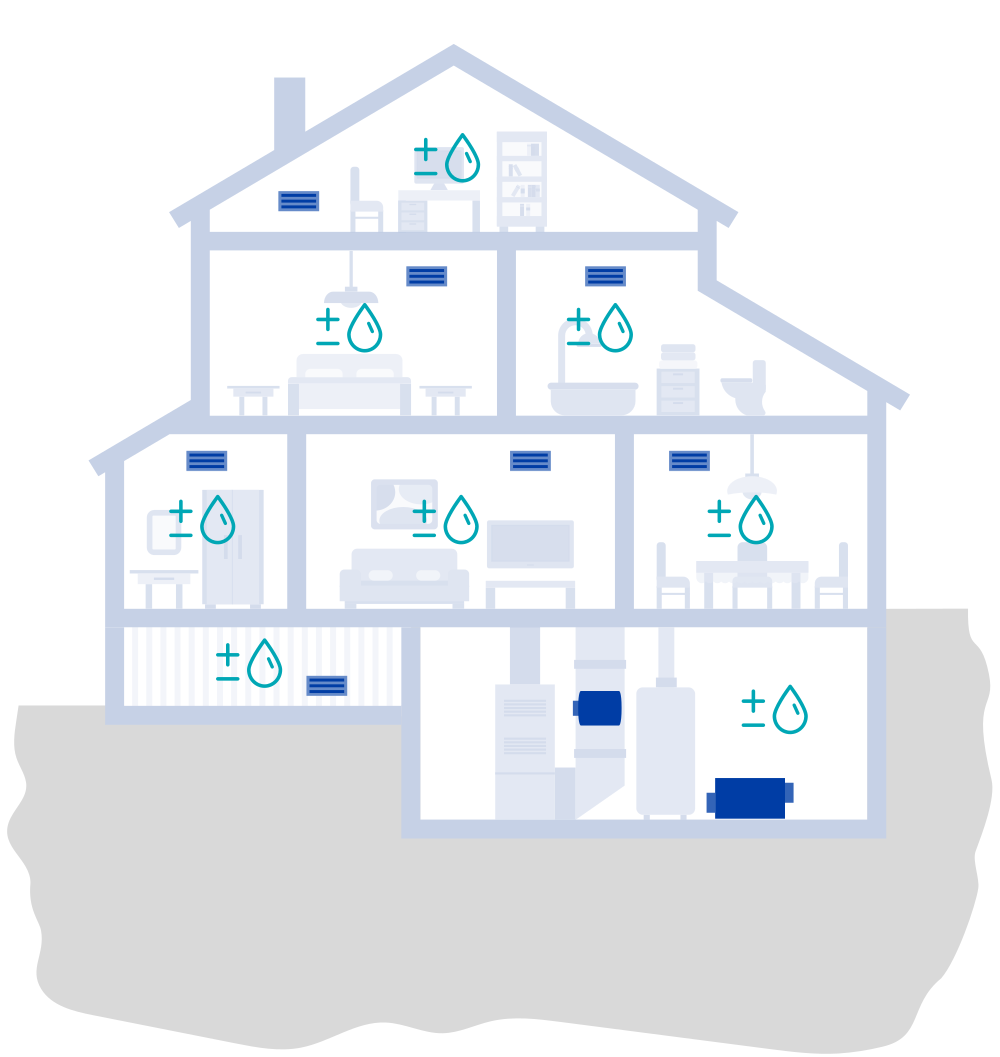
Humidifier
Product that adds moisture or humidity to the air.
Humidistat
Device that senses and controls the humidity in a home and determines
when to activate and deactivate the humidifier.
Humidity
The amount of water vapor in the air.
HVAC
Abbreviation for heating, ventilating and air conditioning.
Hydronic System
Includes baseboard heaters (convectors) and radiant flooring that uses
warm water as the heat source.
Hygrometer
A device used to measure humidity.
I
IAQ
Abbreviation for indoor air quality
Impeller Humidifier
A type of humidifier that produces a cool mist by means of a high speed rotating disk. Thought to produce large dispersions of both microorganisms and minerals.
M
Media
The material in a filter that traps and collects impurities in the air.
Media Air Cleaner
A type of air cleaner that uses a material to strain or collect particulate in a home's air.
MERV
Abbreviation for minimum efficiency reporting value. A rating developed by ASHRAE in 1998 to rate the effectiveness of air cleaners. Although providing a rough estimate of new efficiency, it ignores other real-life factors such as efficiency over time, resistance to airflow and service life.
Micron
One micron equals 1/25,000 of an inch. The standard measure of very
small particles.
Multi-Stage
Heater or air conditioner that can operate at full capacity when necessary or reduced capacity for economy. An example would be a furnace with a normal heat and a high heat output.
O
Ozone
Oxygen molecules that have been separated and recombined into molecules that have a positive or negative charge. Ozone can be created by an electrical field or chemical reaction. Many household appliances generate ozone in the course of normal operation, but the amount generated in most cases is low enough to be of no concern. Ozone in excessive amounts is considered to be a respiratory irritant.
Ozone Generator
A product designed to emit large amounts of ozone. Sometimes sold as "air purifiers". Some studies indicate that these products can exceed health standards. Are considered by the EPA to be generally ineffective in controlling indoor air pollution.
P
Particulates
The term for solid or liquid particles found in the air.
Some particles are large or dark enough to be seen as soot or smoke. Others are so small they can be detected only with an electron microscope. Because particles originate from a variety of mobile and stationary sources, their chemical and physical compositions vary widely.
Pet Dander
Tiny flakes of dead skin from pets that can cause or exacerbate allergies.
Plenum
Section of duct work in a forced air system. Area from the forced air system to the home is called the supply plenum. Area from the home to the forced air system is called the return plenum.
Progressive Recovery
A programming feature on some models of Aprilaire Thermostats that
ensures your house will achieve the desired comfort temperature at the
programmed time when returning from an economy setback temperature.
R
Relative Humidity
The amount of water vapor in the air compared to how much water the air can hold at that temperature. The amount of moisture that air can hold varies with the temperature. Warmer air can hold more, while colder air can hold less. Expressed as a percent. Optimum levels in the home range from 35 - 50%.
Return Ductwork
Ductwork that takes air from the home and brings it back to the HVAC system.
Rhinitis
A medical term for an inflammation of the mucous membranes of the nose.
S
Saddle Valve
Manual device similar to a faucet that connects a humidifier to a water pipe allowing water to flow to the humidifier.
SEER
Abbreviation for seasonal energy efficiency ratio; a measure of cooling efficiency for air conditioners and heat pumps.
Set point
The desired temperature a thermostat is set to achieve and maintain.
Single-Stage
A furnace, air conditioner or heat pump that is capable of providing only one level of capacity and is either ON or OFF.
Solenoid Valve
Used on humidifiers, this electrical device opens and closes to allow water to flow through the humidifier.
Split System
The combination of an indoor unit (air handler or furnace) with an
outdoor unit (heat pump or air conditioner).
Standing Water
A problem that occurs in many portable, reservoir humidifiers that can result in the growth of mold and bacteria.
Supply Duct
Duct that carries air from the HVAC equipment to the home.
Supply Ductwork
Ductwork that delivers air from an HVAC system to the home.
U
Ultrasonic Humidifier
A type of humidifier that creates a cool mist through the use of
ultrasonic vibrations. Thought to produce dispersions of both
microorganisms and minerals.
W
Water Panel®
The heart of an evaporative humidifier, this "honeycombed pad" allows air to pass over water and change the water into vapor.
Z
Zoned Comfort Control
Controls the temperature based on the heating and cooling needs in each
area or "zone" of a home, eliminates hot and cold spots. Dampers are
used to direct hot/cold air to certain areas (or zones) of the home only
when and where it's needed.